
When shopping for an electric tankless water heater for a home, look for models that match your inlet water temperature, daily hot-water demand, and electrical service. The top picks here are best for small, medium, and larger homes, as well as point-of-use needs. This guide highlights five reliable options, explaining who they’re best for and why they were selected. Each product section includes practical installation notes, efficiency features, and any notable limitations to consider before buying.
| Product | Best For | Key Benefit | Limitations |
|---|---|---|---|
| WINTEMP 18kW Electric Tankless | Small homes with 1–2 bathrooms | Self-modulating, energy savings up to 99% | Requires 150 A service; 2 x 40 A breakers |
| Rheem 18kW 240V Tankless | Medium homes with moderate hot-water needs | External digital thermostatic control with LED | Typical 4.4 GPM flow cap |
| APUS 27kW 240V Tankless | Larger households with multiple points of use | Up to 6.5 GPM and 1° F control | 3 x 40 A breakers required |
| NOVIEEX 27kW Tankless | Whole-house use with high demand | 3-4 point flow up to 7.4 GPM | High electrical requirements |
| WINTEMP 27kW Tankless | Homes needing robust hot-water at 2–4 points | ETL certified, 6.5 GPM | 200 A service recommended |
WINTEMP 18kW Electric Tankless Water Heater 240V ETL Certified WiFi

The WINTEMP 18kW unit is designed for residential showers and small homes. It uses self-modulating technology to adjust power with real-time flow, aiming for stable temperatures and energy savings. Best for 1–2 bathroom homes, where a steady supply of hot water is needed without preheating. Installation notes recommend professional electrical assessment: 150 Amp service, two 40 Amp breakers, and appropriate wiring. The unit delivers up to 4.3 GPM and is suitable where space is limited. Caution: Verify electrical capacity before purchase.
Rheem 18kW 240V Tankless Electric Water Heater, Gray
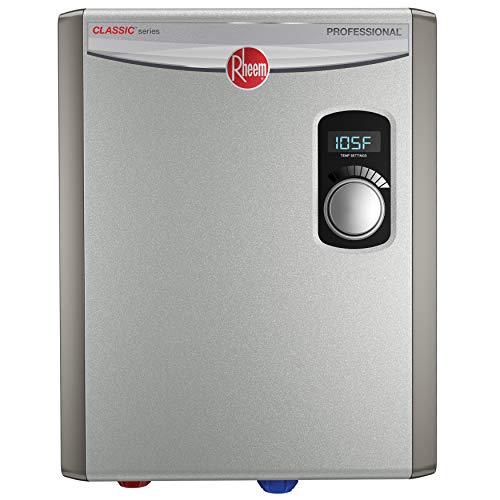
The Rheem model features external digital thermostatic control with an LED display and self-modulation to match hot-water demand. Its copper immersion heating elements are field-serviceable, offering straightforward maintenance. With a flow rate up to 4.4 GPM, it fits typical family use in modest households. Best for: homes seeking simple controls and serviceability. Limitations: flow may be limited at higher demand, depending on inlet water temperature and existing piping.
27kW Tankless Water Heater Electric 240V, Whole House

From SIVUATEK, this 27kW model powers up to 99.8% thermal efficiency with instant hot water and a compact design suitable for under-sink or wall mounting. It’s capable of handling 3–4 simultaneous usages, making it a solid choice for standard to larger homes. Requires three 40-amp circuit breakers and three 8 AWG wires. Best for: bigger homes that need robust multi-point hot water with high efficiency. Caution: verify electrical service capacity prior to purchase.
14kW Tankless Water Heater Electric 240V
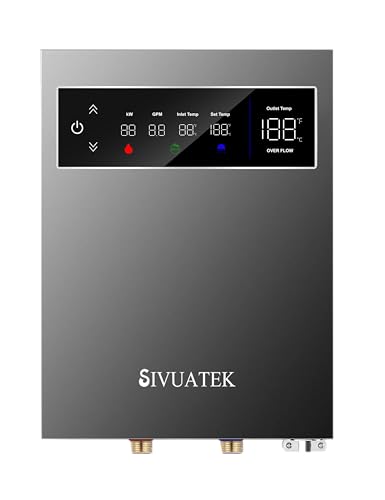
This 14kW unit is designed for sink and shower point-of-use. It uses about 1 x 60-amp circuit breaker and 1/2″ NPT water connections. It offers energy savings through zero standby power and up to 99.8% thermal efficiency. Best for: single bathroom or sink-focused setups. Limitation: lower power output means fewer simultaneous hot-water points.
APUS 27kW Electric Tankless Water Heater
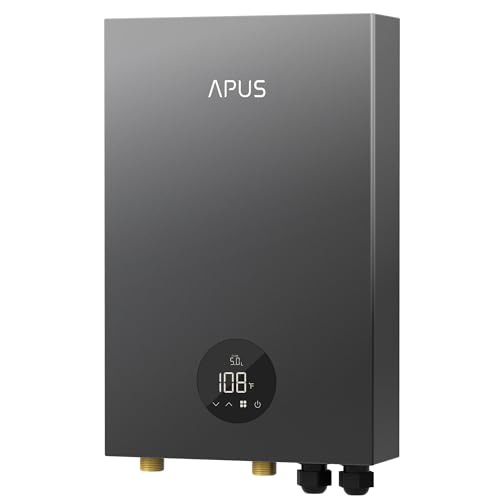
The APUS model delivers up to 6.5 GPM with 27kW heating capacity and a digital control that allows precise 1°F adjustments. Built for 3–4 simultaneous uses, it is a strong option for larger homes or multi-point usage. Requires three 40A breakers and 8 AWG wiring. Best for: households needing rapid, continuous hot water. Caution: ensure electrical system meets the electrical load before purchasing.
Buying Guide: Key Purchase Considerations
- Electrical service capacity: Many 27kW units require 200A service with multiple breakers. Confirm your current electrical panel can support the additional load.
- Flow rate vs. inlet water temperature: Higher GPM ratings work best when inlet water is warm. In very cold climates, performance may drop without higher wattage units.
- Number of hot-water points: Choose a unit designed for the number of simultaneous uses you expect (1–2 for showers/sinks; 3–4 for whole-house use).
- Installation considerations: Proper clearances, venting (where applicable), and professional wiring are essential for safe operation.
- Maintenance and serviceability: Units with field-serviceable elements simplify future repairs and upgrades.
- Energy efficiency: Self-modulating technology saves energy by adjusting output to real demand, especially useful in homes with variable hot-water usage.
- Warranty and certifications: Look for ETL or UL listings and warranty terms from the manufacturer for long-term protection.
Frequently Asked Questions
- Do I need three-phase power or single-phase for these heaters? Most residential models operate on single-phase 240V in the United States, but high-demand units may require substantial service capacity.
- What is GPM and why does it matter? GPM stands for gallons per minute and indicates how much hot water the heater can deliver at a given temperature rise. Higher GPM is needed for multiple simultaneous uses.
- Can these units be installed under a sink? Yes. Several models are designed for under-sink or wall-mount installation when space is limited.
- Is self-modulating technology worth it? Yes, it helps minimize energy waste by adjusting power delivery to real-time flow demand, improving efficiency.
- What should I check before buying? Confirm electrical service adequacy, the number of hot-water outlets you need, inlet water temperature, and space for installation.
- Do these systems provide continuous hot water during high-demand periods? Many models adjust flow to maintain a steady temperature, but some slight reductions in flow may occur at max demand.